Not a factory.
A workbench.
"Why does whole-home audio cost more than rent?"
Sonos wanted hundreds per speaker. Crestron wanted tens of thousands. Every system was locked to one brand, one app, one ecosystem you could never leave. It felt broken on purpose.
So the question became simple: what's the cheapest possible thing that turns any speaker into a synced one? The answer turned out to be a tiny chip, a DAC, and a 3.5mm plug — about $5 in parts.
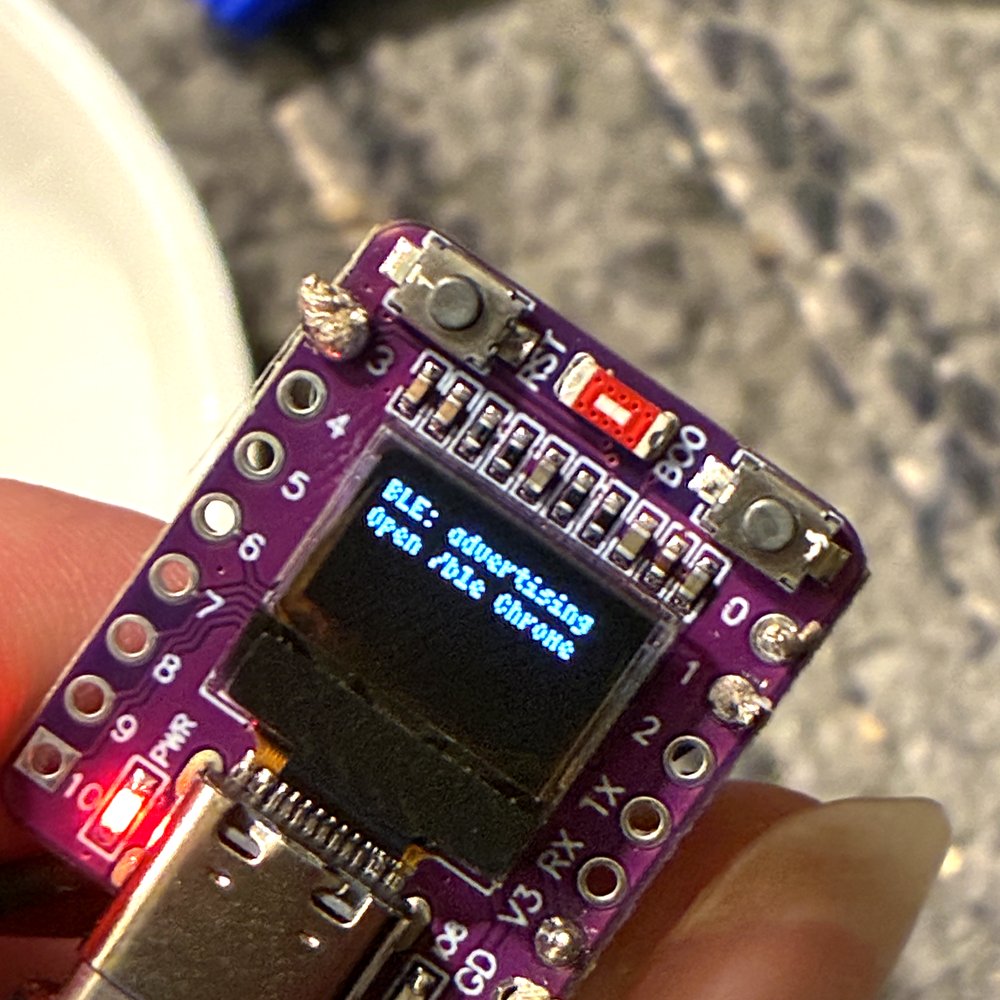
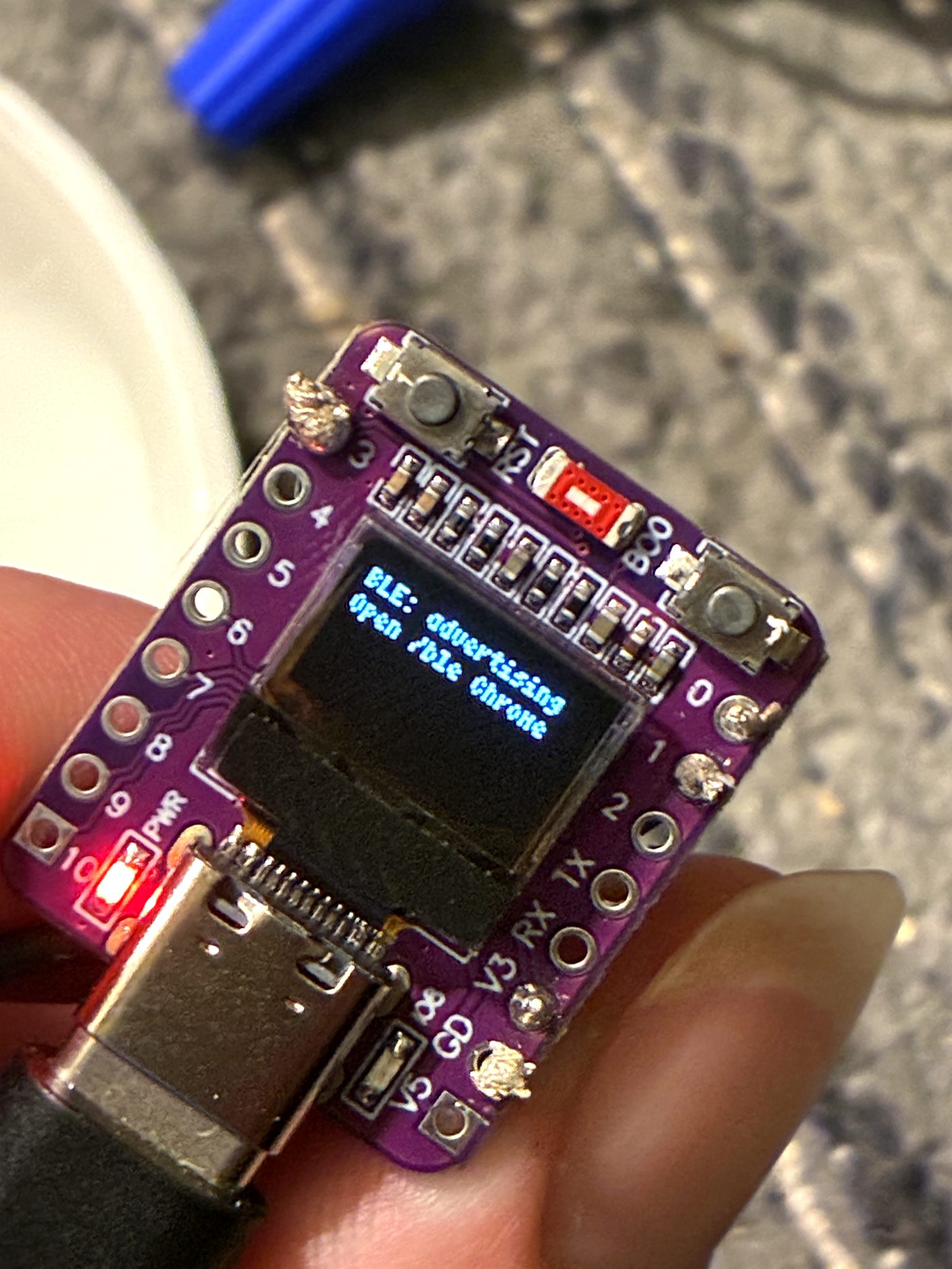
Soldered by hand. Booted on the first try.
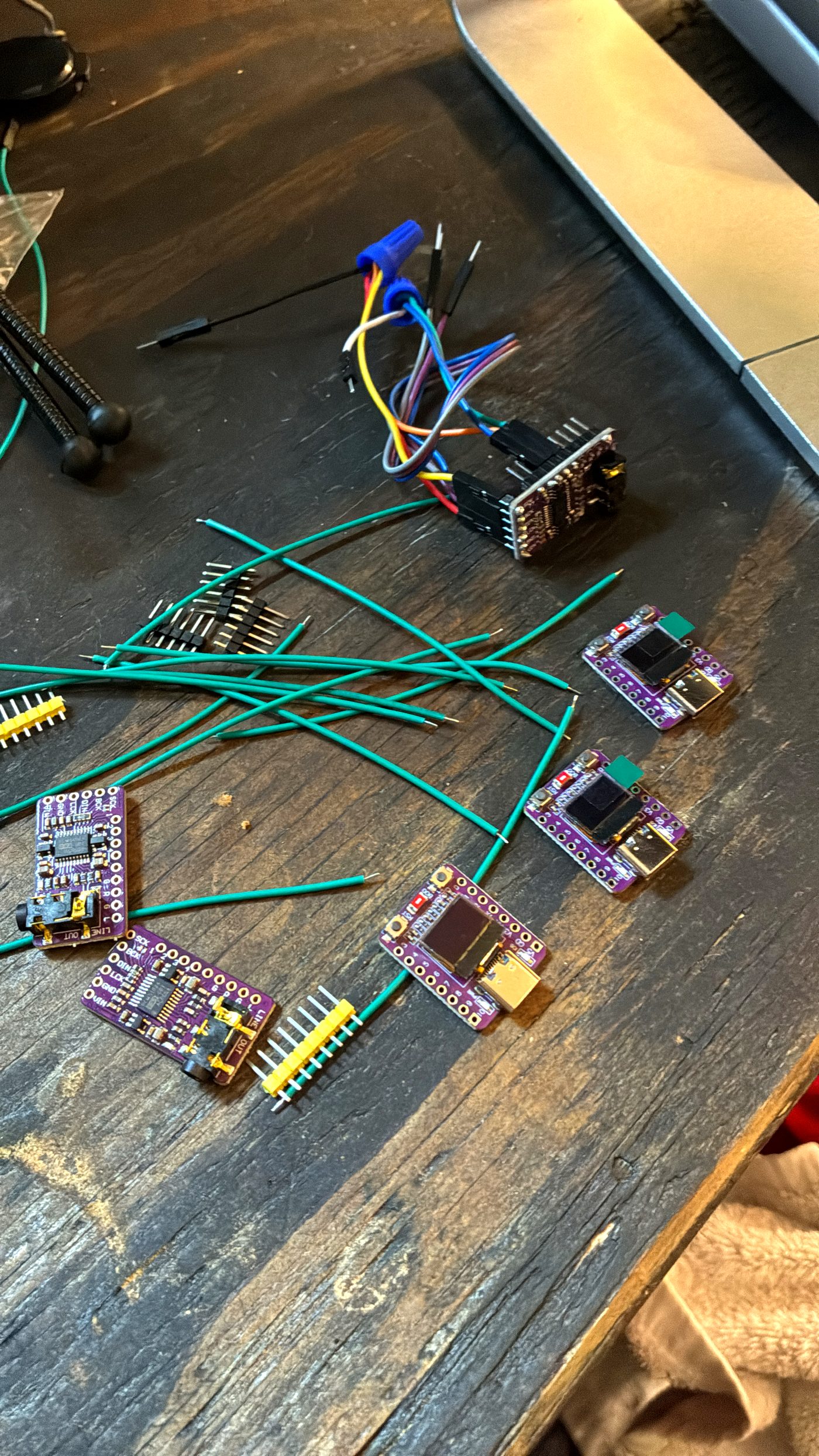
An ESP32-C3, a PCM5102A DAC, and a 0.42" OLED — wired together on a workbench. The first time it powered up and the screen read "BLE: advertising", that was the whole product proving itself in one line of text.
No clean room. No team of engineers. Just a soldering iron, a lot of late nights, and a browser tab that found the device over Bluetooth.
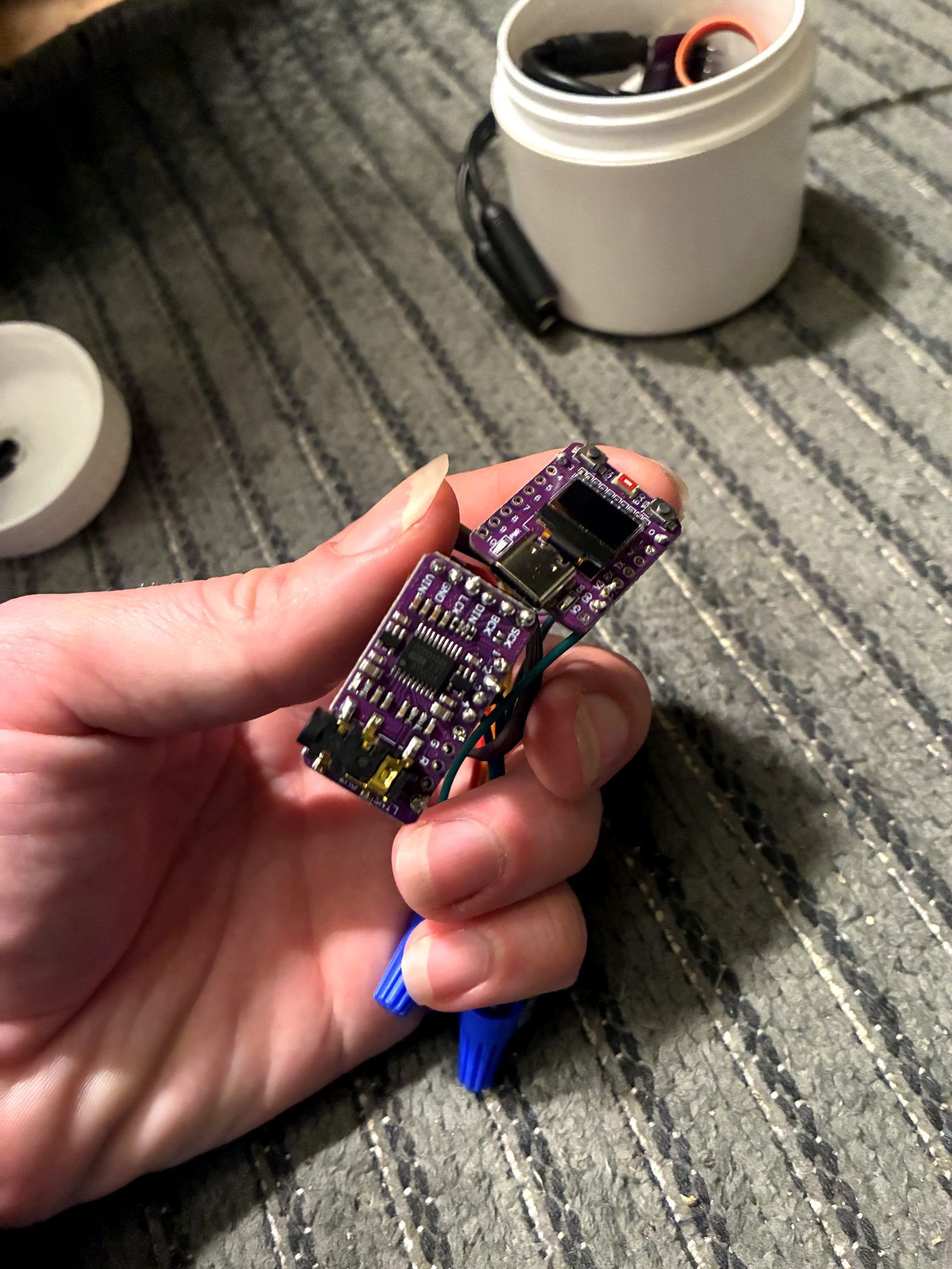
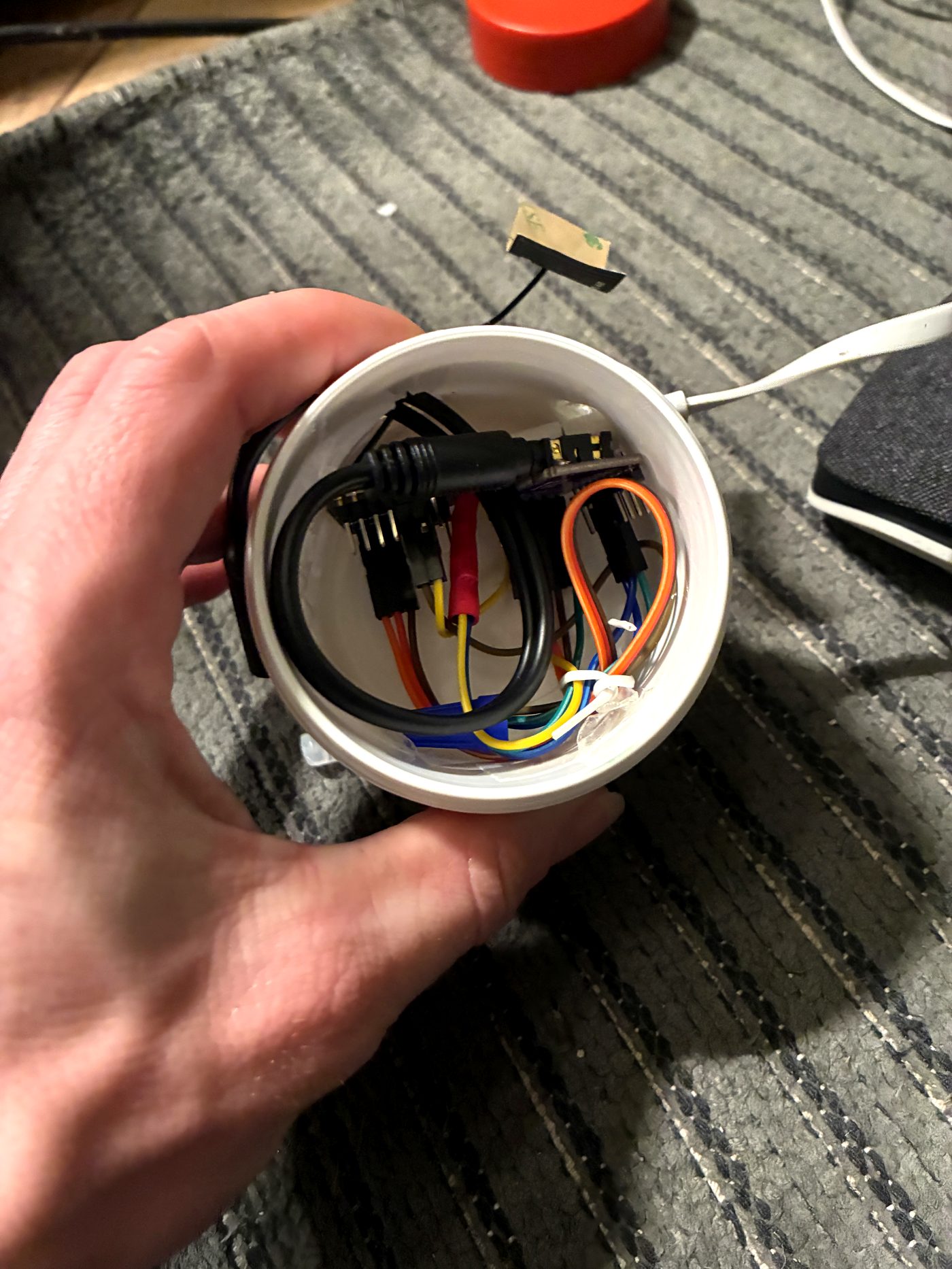
The first enclosure was a jar.
Real hardware doesn't start polished. Early StreamPucks lived inside whatever was on the bench — including a plastic jar with the guts coiled up inside and an AUX cable running out the side.
That's the point of building in public: you see the duct-tape phase, not just the render. The proper PCB and case are coming — but the audio already works.
From one puck to many.
Multiple units, DAC boards, amp modules, and a tangle of jumper wires — the moment it stopped being one prototype and started being a system. Every speaker in the room, in sync, from a single browser tab.